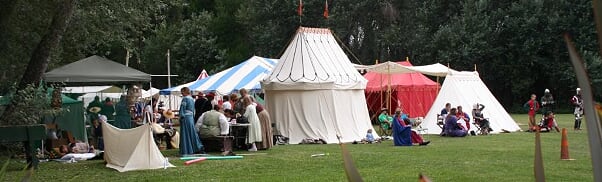
Commons Ward / Training lounge

Early to mid-period linen head-dress

“Linen” is made from flax and has been available to our ancestors since the earliest of times. It is known for its versatility and durability and was used across all social classes. During the medieval period, linen was primarily used to make undergarments like shirts and chemises to practical items like aprons and as well as tunics and cloaks. The fabric was particularly valued for its cooling properties in summer and its ability to be layered for warmth in winter.

Bodice Patterning and Fitting

A good bodice should be comfortable, fit smoothly with no wrinkles or strain gaps, not gape at neckline or armscye, stay on your shoulders and (if required) provide excellent support. This class will walk through the process of drafting and fitting a supporting bodice.

No class size limit, no cost

Introduction into Leatherwork

Many people have done some modern leatherwork, so how does medieval leatherwork differ? This class will look at the materials, tools, and techniques of the medieval leatherworker, and how leather was used in period, for everything from shoes to scabbards, spectacles to leather casework. And some info on how to get started on the medieval version of this craft.

Medieval Fastenings

How did medieval people fasten their clothes? Laces, buttons, hooks & eyes... This class will look at the evidence for different types of fastenings, how these changed over time, and some practical information on how recreate these fastenings for use on your own garb.

No class size limit, no cost